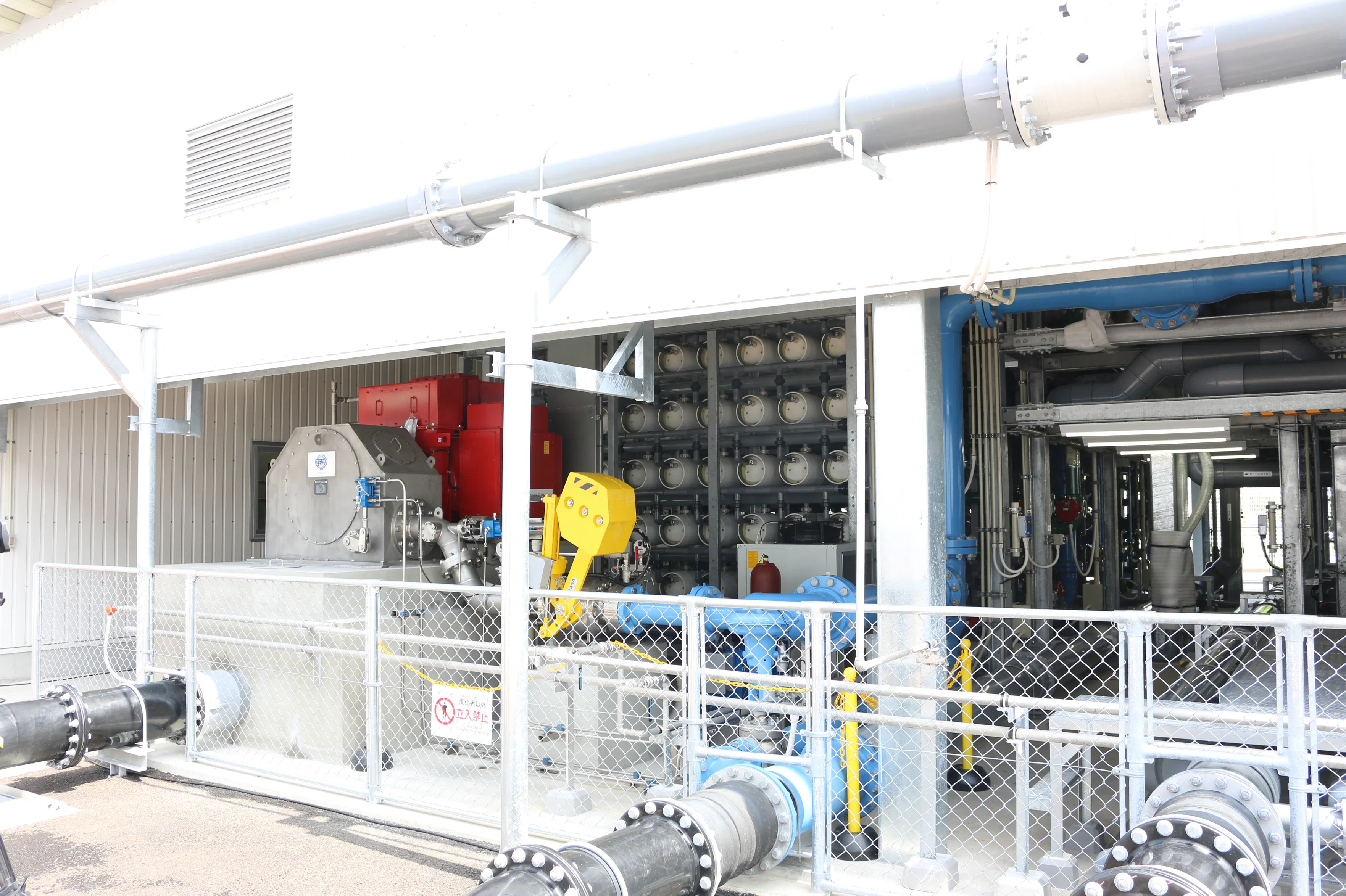
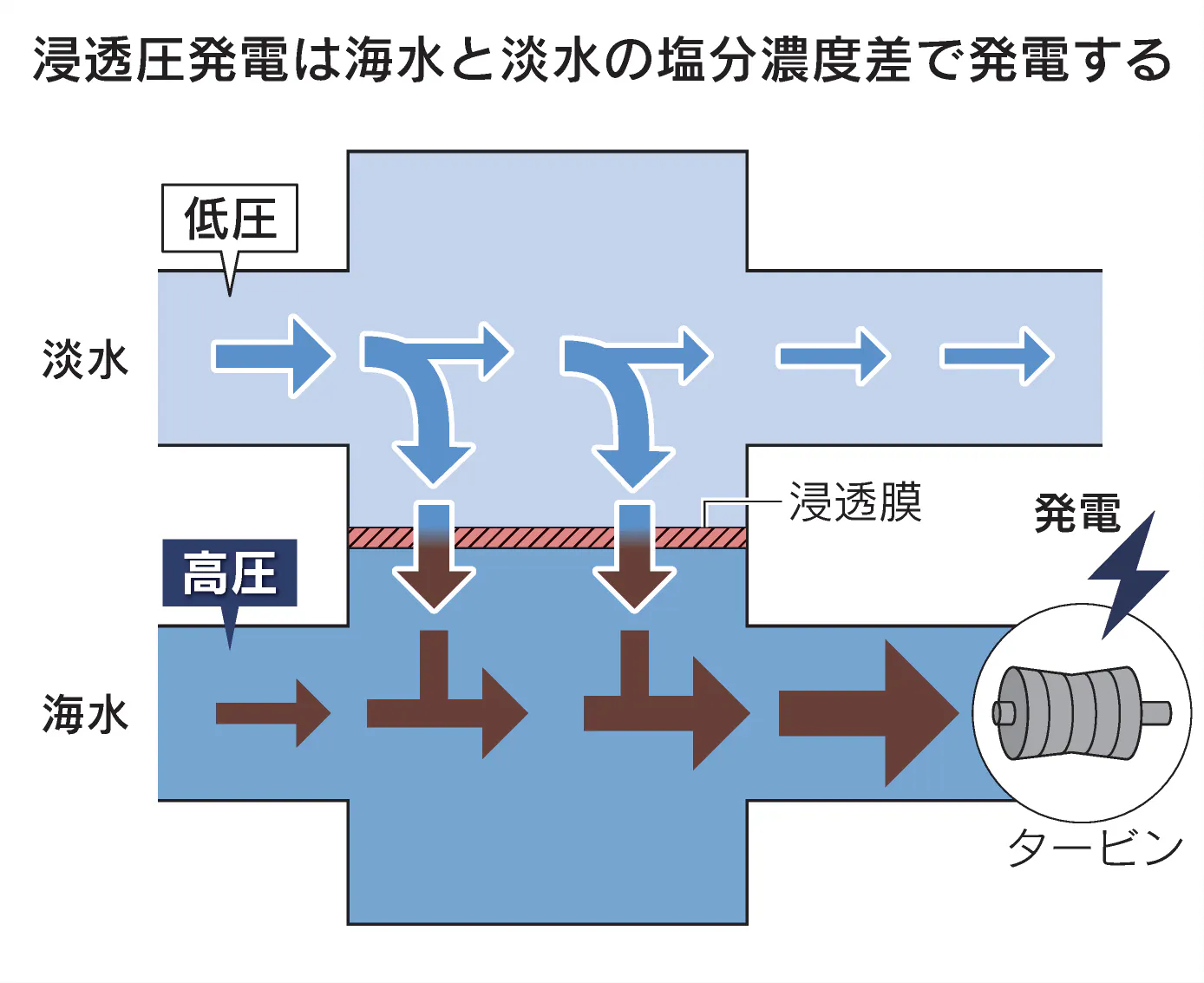
海水を淡水化する過程で浸透圧を利用して発電するのだとか。
1つのプラントでは得られる電力が少なくとも、塵も積もれば何とやらで複数のプラントを建てれば(建てられれば)いいし、施設の屋根に太陽光パネルを設置できるのなら組み合わせでいいかも。
福岡で稼働開始した「浸透圧発電所」の解説記事https://t.co/hMJZcXX5to
浸透膜の両側に淡水と海水を通して移動した水の圧力ででプロペラ回す。デンマークが2023年にプラント建てたので世界で2例目。
得られる電力はかなり少ない(88万kwh)が、太陽光や風力より安定資源— ゆきまさかずよし (@Kyukimasa) August 25, 2025
福岡は大きな河川がなくて海水の淡水化をやってるから、淡水化プラントから出た濃い塩水と都市排水の高い塩分濃度の浸透圧を活用しているのねhttps://t.co/GwTAXSJe13 pic.twitter.com/LL3ziSOqw2
— ゆきまさかずよし (@Kyukimasa) August 25, 2025
そういえばデンマークにある世界初の浸透圧発電所SaltPower、東洋紡の中空糸膜を使っているhttps://t.co/vYY4ZOEiNi
製塩工場に併設されてて、地下の岩塩層から汲み上げられた高濃度塩水を使用(福岡のも同様だけど普通の海水ではやや圧力が足りない)https://t.co/tJGc3qX2Rq pic.twitter.com/4jbsEHmcg1— ゆきまさかずよし (@Kyukimasa) August 26, 2025
◆Japan has opened its first osmotic power plant – so what is it and how does it work?【The Guardian : Ima Caldwell 2025年8月25日】
The site in Fukuoka is only the second power plant of its type in the world, harnessing the power of osmosis to run a desalination plant in the city
Japan’s first osmotic power plant uses the process of osmosis to power a turbine that in turn creates energy. Photograph: Fukuoka Area Waterworks AgencyJapan has opened its first osmotic power plant, in the south-western city of Fukuoka.
Only the second power plant of its type in the world, it is expected to generate about 880,000 kilowatt hours of electricity each year – enough to help power a desalination plant that supplies fresh water to the city and neighbouring areas.
That’s the equivalent of powering about 220 Japanese households, according to Dr Ali Altaee from the University of Technology Sydney (UTS), who specialises in the development of alternative water sources.
While it is still an emerging technology being used only on a modest scale as yet, it does have an advantage over some other renewable energies in that it is available around the clock, regardless of the wind or weather or other conditions.
It relies simply on the mixing of fresh and salt water, so the energy flow can continue day and night, providing a steady source of electricity.
So what is osmotic power and could it be used elsewhere?
What is osmotic power?
Osmosis is the natural process where water moves across a semipermeable membrane from a less concentrated solution to a more concentrated one, in an attempt to balance the concentration on both sides.
Picture a cup divided vertically by a thin, semi-permeable layer – if one side holds salty water and the other side pure freshwater, the water will flow towards the salty side to dilute it, because the salt itself cannot pass through the membrane.
Osmotic power plants use this same principle, by placing freshwater and seawater on either side of a special membrane, with the seawater slightly pressurised.
As water flows across to the saltier side, it increases the volume of pressurised solution, which can then be harnessed to produce energy.
In the Fukuoka facility, fresh water – or treated wastewater – and seawater are placed on either side of a membrane. As the side with seawater increases in pressure and decreases in salinity, some of the water is channelled through a turbine that is connected to a generator, producing power.
Where else is the technology being used?
The Fukuoka plant is the second of its kind in the world. The first one was built in 2023 in Mariager, Denmark, by the venture company SaltPower, said University of Melbourne Prof Sandra Kentish.
The Japanese power plant is larger than the one in Denmark, according to Dr Altaee, although they have almost the same operating capacity. Pilot-scale demonstrations have also taken place in countries such as Norway and South Korea.
Altaee said UTS has its own prototype in Sydney, but the program lost traction during Covid. He has also helped build prototypes in Spain and Qatar.
What are the challenges?
While the idea is simple, scaling it up is difficult.
Kentish said a lot of energy is lost through the action of pumping water into the power plant and when it travels through the membranes.
“While energy is released when the salt water is mixed with fresh water, a lot of energy is lost in pumping the two streams into the power plant and from the frictional loss across the membranes. This means that the net energy that can be gained is small,” she said.
But advances in membrane and pump technology are reducing these problems, Kentish said.
“It is also noteworthy that the Japanese plant uses concentrated seawater, the brine left after removal of fresh water in a desalination plant, as the feed, which increases the difference in salt concentrations and thus the energy available.”
What does this mean for the future?
Kentish and Altaee agree that the Japanese plant marks an exciting moment for osmotic power, because it offers further proof that the technology can be used for large-scale energy production.
Altaee said the prototype plant at Australian university UTS could be restarted if government funding became available, raising its potential for larger-scale implementation in Australia, similar to that of the plant in Fukuoka.
“We have salt lakes around New South Wales and Sydney that could be used as a resource and we also have the expertise to build it.”
◆日本初の浸透圧発電、福岡市で稼働 海水と淡水の塩分濃度差で水流【日本経済新聞 2025年8月5日】
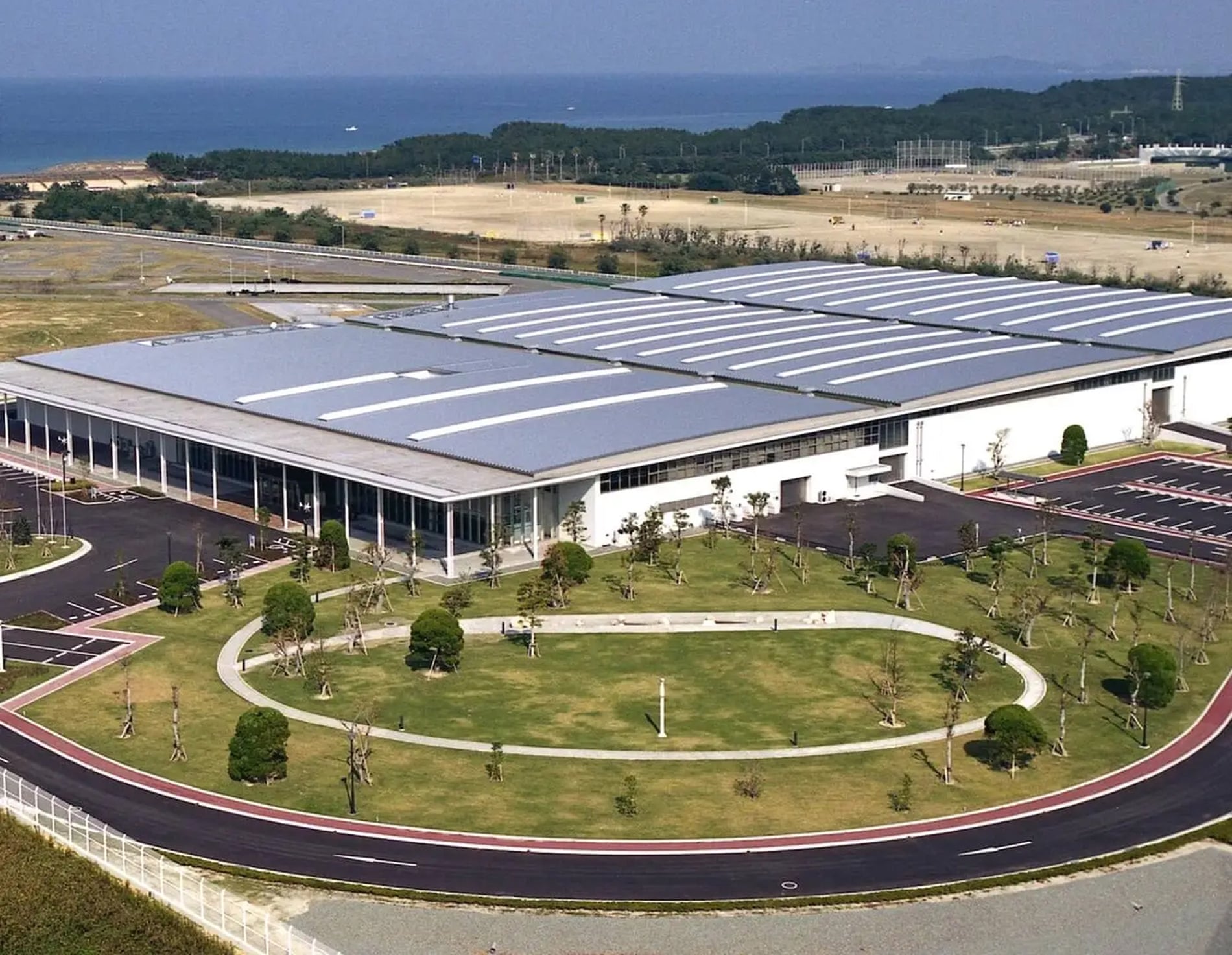
運転を始めた浸透圧発電設備(5日、福岡市)福岡市は5日、海水と淡水の塩分濃度差によって生じる浸透圧を利用した「浸透圧発電」の設備を市内の海水淡水化センターで稼働した。年間発電量は88万キロワット時の見込みで、センターで使用する電力の一部をまかなう。発電量や発電効率、温度など水質の変化を検証する。
高島宗一郎市長は同日、「この取り組みをきっかけに、日本や世界の脱炭素の実現に貢献できるものを福岡から開発したい」と期待を込めた。市によると、浸透圧発電を実用化するのは日本で初めて、世界でもデンマークに続き2例目という。
総建設費用は約7億円。プラントメーカーの協和機電工業(長崎市)が発電設備の設置・運転を手掛け、実際の発電量・発電効率の検証や性能確認を行う。今後5年で機器の劣化や設備寿命などランニングコストを検証する。
浸透圧発電は塩水と真水を浸透膜で隔て、塩分濃度が薄い真水側から濃い塩水側に水が移動する際の運動エネルギーを利用してタービンを回して発電する。
福岡市の設備では海水から淡水をつくる際にでる塩分濃度約8%の濃縮海水と、近隣の和白水処理センターから排出される下水処理水を活用する。
発電効率を高めるために、濃縮海水には高圧をかけ、タービンを高速で回転させられるようにした。発電出力は230キロワットで、そのうち120キロワットは設備自体の稼働に消費する。稼働当初は設備の検証もかねて7割程度の発電量に抑えるという。将来は通常の海水を用いた発電を目指す。
浸透圧発電は天候や時間帯に関係なく発電できる。晴れた日中しか発電できない太陽光発電の稼働率が10〜20%であるのに対して、浸透圧発電の稼働率は90%程度を見込む。
発電に使用した水は塩分濃度を薄めたうえで博多湾に放出する。そのまま放出すると、周辺の塩分濃度が上昇し生態系に影響を及ぼす可能性があるためという。