SARS-CoV-2 と COVID-19 に関するメモ・備忘録
ロングコロナ患者400万人超を対象にした最新メタ分析で、感染から6ヶ月経っても
・倦怠感 43.3%
・記憶障害 27.8%
・認知機能低下 27.1%
が持続していることが判明。年齢問わず脳機能の長期障害が見られ、社会生活への深刻な影響が浮き彫りに。https://t.co/fzZ3aifh7B— Angama (@Angama_Market) June 17, 2025
◆Long-term neurological and cognitive impact of COVID-19: a systematic review and meta-analysis in over 4 million patients【BMC Neurology 2025年6月14日】
Abstract
Background
Neuropsychiatric symptoms emerged early in the COVID-19 pandemic as a key feature of the virus, with research confirming a range of neuropsychiatric manifestations linked to acute SARS-CoV-2 infection. However, the persistence of neurological symptoms in the post-acute and chronic phases remains unclear. This meta-analysis assesses the long-term neurological effects of COVID-19 in recovered patients, providing insights for mental health service planning.
Methods
A comprehensive literature search was conducted across five electronic databases: PubMed, Scopus, Web of Science, EBSCO, and CENTRAL, up to March 22, 2024. Studies evaluating the prevalence of long-term neurological symptoms in COVID-19 survivors with at least six months of follow-up were included. Pooled prevalence estimates, subgroup analyses, and meta-regression were performed, and publication bias was assessed.
Results
The prevalence rates for the different symptoms were as follows: fatigue 43.3% (95% CI [36.1-50.9%]), memory disorders 27.8% (95% CI [20.1-37.1%]), cognitive impairment 27.1% (95% CI [20.4-34.9%]), sleep disorders 24.4% (95% CI [18.1-32.1%]), concentration impairment 23.8% (95% CI [17.2-31.9%]), headache 20.3% (95% CI [15-26.9%]), dizziness 16% (95% CI [9.5-25.7%]), stress 15.9% (95% CI [10.2-24%]), depression 14.0% (95% CI [10.1-19.2%]), anxiety 13.2% (95% CI [9.6-17.9%]), and migraine 13% (95% CI [2.2-49.8%]). Significant heterogeneity was observed across all symptoms. Meta-regression analysis showed higher stress, fatigue, and headache in females, and increased stress and concentration impairment with higher BMI.
Conclusions
Neurological symptoms are common and persistent in COVID-19 survivors. This meta-analysis highlights the significant burden these symptoms place on individuals, emphasizing the need for well-resourced multidisciplinary healthcare services to support post-COVID recovery.
コロナ症状の中でも見過ごされがちな「筋肉痛」は実は感染者の86%に見られる主要症状。IL-6などの炎症性サイトカインと、筋肉細胞自体へのウイルス侵入が原因とされ、初期から現れ長引くことも。特に脚や首、顔に集中し、回復には安静とリハビリの工夫が必要。https://t.co/jWfddAYQhY
— Angama (@Angama_Market) June 17, 2025
◆COVID’s most overlooked symptom finally exposed【Rolling Out : Tega Egwabor 2025年6月15日】
Hidden causes behind widespread body pain reveal new recovery insights
The widespread muscle pain experienced by COVID-19 patients has become one of the most misunderstood aspects of the virus, affecting far more people than initially recognized. Medical observations show that muscle aches, known medically as myalgia, impact an staggering 86% of individuals who contract the virus, making it one of the most common symptoms across all age groups and severity levels.
What makes these muscle aches particularly challenging is their unpredictable nature and the multiple ways they can affect the body. Unlike typical muscle soreness from exercise or injury, COVID-related muscle pain often appears without warning and can persist long after other symptoms have resolved, leaving millions of people searching for answers and effective relief strategies.
The complexity of COVID muscle pain extends beyond simple discomfort, often signaling deeper physiological changes occurring within the body as it battles the virus. Understanding these mechanisms has become crucial for both patients and healthcare providers working to develop effective treatment approaches for this widespread symptom.
The body’s inflammatory response creates widespread discomfort
When the immune system encounters COVID-19, it launches an aggressive defense that inadvertently causes significant muscle discomfort throughout the body. This response involves the release of specialized proteins called cytokines, which serve as chemical messengers that coordinate the immune system’s attack against the virus.
The primary culprits behind COVID muscle pain include interleukin-6, interleukin-1, and tumor necrosis factor-alpha. These powerful inflammatory compounds flood the bloodstream as part of the body’s natural defense mechanism, but their presence creates a cascade of effects that result in widespread muscle and joint aches.
This inflammatory process doesn’t discriminate between different muscle groups, which explains why COVID patients often report simultaneous pain in multiple areas of their body. The systemic nature of this inflammation means that muscles that haven’t been used or strained can still experience significant discomfort, catching many patients off guard.
The intensity of this inflammatory response varies from person to person, with some experiencing mild muscle stiffness while others report debilitating pain that interferes with daily activities. Factors such as age, overall health status, and the body’s individual immune response all contribute to the severity and duration of muscle-related symptoms.
Direct viral attack on muscle tissue adds another layer of pain
Beyond the inflammatory response, medical observations have revealed that COVID-19 can directly target and damage muscle tissue itself. The virus has the ability to attach to muscle cells, causing cellular damage that contributes to the pain and weakness many patients experience during their illness.
This direct muscle invasion represents a significant departure from how other respiratory viruses typically affect the body. While most viral infections cause muscle aches primarily through inflammatory processes, COVID-19’s ability to directly damage muscle tissue helps explain why some patients experience more severe and longer-lasting muscle symptoms.
The combination of inflammatory damage and direct viral attack creates a dual mechanism of muscle pain that can be particularly challenging to treat. This explains why traditional pain management approaches that work well for other types of muscle discomfort may be less effective for COVID-related muscle pain.
The direct tissue damage also helps explain why muscle pain often appears as one of the earliest COVID symptoms, sometimes preceding the more recognized respiratory symptoms by several days. This early onset occurs because the virus can begin attacking muscle tissue before it significantly impacts the respiratory system.
Geographic patterns of pain reveal surprising insights
The distribution of COVID muscle pain throughout the body follows distinct patterns that differ from typical muscle strain or injury. Medical observations have identified that the legs, neck, and head represent the most commonly affected areas, with each region presenting unique challenges for patients.
Leg pain from COVID often manifests as deep, aching sensations that can make walking or standing for extended periods difficult. This lower extremity involvement can significantly impact mobility and daily functioning, particularly for patients who were previously active and healthy.
Neck pain associated with COVID frequently extends beyond simple muscle soreness to include stiffness and reduced range of motion that can persist for weeks after other symptoms resolve. This neck involvement often coincides with headaches, creating a cycle of discomfort that affects sleep quality and overall well-being.
Head and facial muscle pain represents another common manifestation that can be easily mistaken for tension headaches or sinus problems. This type of discomfort often involves the muscles around the temples, jaw, and forehead, sometimes making activities like chewing or speaking uncomfortable.
Joint pain, particularly in the wrists, ankles, shoulders, and knees, frequently accompanies muscle aches and can create additional functional limitations. Many patients also report significant lower back pain that can make sleeping and sitting for extended periods challenging.
Timeline reveals the unpredictable nature of muscle symptoms
The onset and duration of COVID muscle pain follow patterns that often surprise both patients and healthcare providers. Unlike many viral illnesses where muscle aches appear alongside fever and other systemic symptoms, COVID muscle pain frequently emerges as one of the very first signs of infection.
This early appearance of muscle pain, often preceding respiratory symptoms like cough and shortness of breath, has led many patients to initially dismiss their discomfort as unrelated to COVID. This early onset pattern has important implications for infection control, as individuals may be contagious while experiencing only muscle aches and no other obvious COVID symptoms.
For patients with mild COVID cases, muscle pain typically resolves within one to two weeks, following a gradual improvement pattern that parallels recovery from other symptoms. However, this timeframe can vary significantly based on individual factors and the overall severity of the infection.
Patients with more severe COVID cases, particularly those requiring hospitalization, often experience prolonged muscle pain that can persist for over four weeks. This extended duration reflects the more intense inflammatory response and potential for greater tissue damage in severe cases.
Long COVID creates lasting muscle pain challenges
The emergence of long COVID has revealed that muscle pain can persist for months or even years after the initial infection resolves. Conservative estimates suggest that at least 10% of COVID patients will develop long COVID, with muscle pain being one of the most common persistent symptoms.
In long COVID patients, muscle pain often takes on different characteristics than the acute phase pain. Many experience what medical professionals term ischemic myalgia, which results from inadequate blood flow to muscle tissues. This type of pain can be particularly challenging to treat because it involves ongoing circulation problems rather than just residual inflammation.
The chronic nature of long COVID muscle pain requires different management approaches than acute COVID muscle symptoms. Patients often need comprehensive rehabilitation programs that address both the physical symptoms and the functional limitations that develop over time.
The unpredictability of long COVID muscle pain adds another layer of complexity, with symptoms often fluctuating in intensity and location without apparent triggers. This variability can make it difficult for patients to plan activities and for healthcare providers to develop consistent treatment strategies.
Effective home management strategies provide relief
For patients experiencing mild to moderate COVID muscle pain, several home-based management strategies have proven effective in providing relief and supporting recovery. The key to successful home management lies in understanding which approaches work best at different stages of the illness.
The RICE method – Rest, Ice, Compression, and Elevation – provides a foundation for managing acute muscle pain during the first few days of symptoms. Applying ice to affected areas for the first three days helps reduce inflammation and numb pain, while compression garments can provide additional support for aching muscles.
After the initial three-day period, transitioning from ice to heat therapy often provides better relief as the acute inflammatory phase subsides. Heat helps improve blood flow to affected muscles and can reduce stiffness that develops during the recovery phase.
Over-the-counter pain medications play an important role in managing COVID muscle pain, with both acetaminophen and ibuprofen showing effectiveness. The choice between these medications often depends on individual tolerance and the presence of other symptoms or medical conditions.
Gentle stretching and massage can provide significant relief for muscle stiffness and pain, particularly as patients begin to recover. These techniques help maintain flexibility and prevent the development of compensatory movement patterns that can lead to additional pain.
Physical activity balance promotes healing
Finding the right balance of activity and rest represents one of the most challenging aspects of managing COVID muscle pain. While rest is important during the acute phase of illness, gentle movement often provides better outcomes than complete inactivity once patients begin to recover.
Light walking, when patients feel able, helps maintain muscle strength and flexibility while promoting circulation that supports healing. The key is starting slowly and gradually increasing activity levels based on individual tolerance and symptom response.
For patients with persistent muscle pain, working with physical therapy professionals can provide valuable guidance in developing safe and effective exercise programs. These specialists can design individualized approaches that address specific muscle pain patterns and functional limitations.
The timing of return to more vigorous physical activity requires careful consideration, particularly for patients who were previously active. Pushing too hard too soon can potentially worsen muscle pain and delay overall recovery.
Distinguishing COVID muscle pain from other causes
Given that muscle aches can result from numerous conditions unrelated to COVID-19, accurately identifying the cause of muscle pain has become increasingly important. Understanding the distinguishing features of COVID muscle pain can help patients and healthcare providers make appropriate treatment decisions.
COVID muscle pain typically appears alongside other viral symptoms such as fever, fatigue, or changes in taste and smell. The widespread, multi-site nature of COVID muscle pain also differs from more localized pain caused by muscle strain or injury.
The timing of symptom onset provides another important clue, with COVID muscle pain often appearing suddenly and progressing rapidly, unlike the gradual onset typically seen with conditions like fibromyalgia or chronic fatigue syndrome.
Testing remains the most reliable method for confirming COVID as the cause of muscle pain. Both clinical and home testing options provide valuable information for guiding appropriate treatment decisions and infection control measures.
Recovery outlook brings hope for most patients
Despite the challenging nature of COVID muscle pain, the long-term outlook for most patients remains positive. The majority of individuals experience complete resolution of muscle symptoms within several weeks of infection, particularly when appropriate management strategies are implemented early in the course of illness.
Even patients with more severe or prolonged muscle pain often see significant improvement over time with proper treatment and rehabilitation. The key to successful recovery often lies in patience and consistency with treatment approaches rather than expecting rapid resolution.
For patients with persistent symptoms, emerging treatment options and rehabilitation programs continue to show promise in providing relief and restoring function. The growing understanding of COVID muscle pain mechanisms is leading to more targeted and effective treatment approaches.
The experience of COVID muscle pain, while challenging, has also led many patients to develop better awareness of their body’s signals and more effective self-care strategies that benefit their overall health beyond their COVID recovery.
ロングコロナと睡眠の関係を調査した英研究。感染前から睡眠の質が悪い人は後遺症リスクが高く、感染後も睡眠時間が不安定に。炎症や腸内環境、自己免疫など候補メカニズムとも関係。睡眠の改善が後遺症の鍵になる可能性https://t.co/gZwmpE7bUA
— Angama (@Angama_Market) June 18, 2025
◆Bidirectional relationship between sleep problems and long COVID: a longitudinal analysis of data from the COVIDENCE UK study【BMC Open Respiratory epidemiology 2025年6月15日】
Abstract
Background Studies into the bidirectional relationship between sleep and long COVID have been limited by retrospective pre-infection sleep data and infrequent post-infection follow-up. We therefore used prospectively collected monthly data to evaluate how pre-infection sleep characteristics affect risk of long COVID and to track changes in sleep duration during the year after SARS-CoV-2 infection.
Methods COVIDENCE UK is a prospective, population-based UK study of COVID-19 in adults. We included non-hospitalised participants with evidence of SARS-CoV-2 infection and used logistic regression to estimate adjusted ORs for the association between preinfection sleep characteristics and long COVID. We assessed post-infection sleep duration using multilevel mixed models. We collected sleep data from participants using a subset of questions from the Pittsburgh Sleep Quality Index. We defined long COVID as unresolved symptoms at least 12 weeks after infection. COVIDENCE UK is registered with ClinicalTrials.gov, NCT04330599.
Results We included 3994 participants in our long COVID risk analysis, of whom 327 (8.2%) reported long COVID. We found an inverse relationship between pre-infection sleep quality and risk of long COVID (medium vs good quality: OR 1.37, 95% CI 1.04 to 1.81; medium–low vs good: 1.55, 1.12 to 2.16; low vs good: 1.94, 1.11 to 3.38). Greater variability in pre-infection sleep efficiency was also associated with long COVID when adjusted for infection severity (OR per percentage-point increase 1.07, 1.02 to 1.12). We assessed post-infection sleep duration in 6860 participants, observing a 0.11 hour (95% CI 0.09 to 0.14) increase in the first month after infection compared with pre-infection, with larger increases for more severe infections. After 1 month, sleep duration largely returned to pre-infection levels, although fluctuations in duration lasted up to 6 months after infection among people reporting long COVID.
Conclusions While poor-quality sleep before SARS-CoV-2 infection associates with increased risk of long COVID thereafter, changes in sleep duration after infection in these non-hospitalised cases were modest and generally quick to resolve.
SARS-CoV-2のnsp15は、ウイルスのRNAを切断して宿主の免疫センサー(MDA5やRIG-I)からの発見を回避していると判明。これにより複製効率が上がり、重症化に関与する可能性。免疫回避の中核タンパク質として注目https://t.co/inTPMoibLl
— Angama (@Angama_Market) June 18, 2025
◆SARS-CoV-2 nsp15 enhances viral virulence by subverting host antiviral defenses【PNAS 2025年6月12日】
Significance
Severe acute respiratory syndrome coronavirus 2 (SARS-CoV-2) employs multiple strategies to evade human antiviral defenses, leading to potentially severe outcomes such as pneumonia and death. A detailed investigation of these evasion strategies should enhance our understanding of SARS-CoV-2 pathogenesis and guide future vaccine development. In this study, we focus on the SARS-CoV-2 nonstructural protein 15 (nsp15) and demonstrate that its endoribonuclease activity delays the activation of antiviral responses in human lung cells. SARS-CoV-2 variants lacking this activity exhibit impaired replication and cause milder disease in animals, highlighting nsp15 as a key virulence factor. These findings underscore the importance of nsp15’s endoribonuclease activity in both promoting virus replication and influencing disease severity.
Abstract
SARS-CoV-2 encodes numerous virulence factors, yet their precise mechanisms of action remain unknown. We provide evidence that the SARS-CoV-2 nonstructural protein 15 (nsp15) enhances viral virulence by suppressing the production of viral double-stranded (dsRNA), a potent inducer of antiviral signaling. The viral variants lacking nsp15 endoribonuclease activity elicited higher innate immune responses and exhibited reduced replication in human stem cell–derived lung alveolar type II epithelial cells, as well as in the lungs of infected hamsters. Consistently, these variants caused significantly less weight loss and mortality compared to wild-type (WT) virus in K18-hACE2 mice. Mechanistically, the cells infected with nsp15 mutants accumulated more viral dsRNA, causing enhanced stimulation of the interferon pathway. Chemical inhibition of interferon signaling dampened immune responses to nsp15 mutants and restored their replication to levels similar to the WT virus. These findings indicate that the endoribonuclease activity of nsp15 contributes to viral virulence by limiting the accumulation of viral dsRNA, thereby allowing robust replication with reduced activation of the host innate immune response.
コロナに感染した肺の細胞が、自らのヌクレオカプシド(NP)蛋白を健康な細胞に移すことで、免疫に“敵”と誤認させ破壊を誘導することが判明。抗NP抗体が補体を活性化し、非感染細胞も巻き込む免疫誤爆が肺損傷の一因に。https://t.co/GGKHFtjUWw
— Angama (@Angama_Market) June 18, 2025
◆Transfer of SARS-CoV-2 nucleocapsid protein to uninfected epithelial cells induces antibody-mediated complement deposition【Cell Reports 2025年5月8日】
Summary
SARS-CoV-2 infection triggers a strong antibody response toward nucleocapsid protein (NP), suggesting its extracellular presence beyond intravirion RNA binding. Our co-culture experiments show NP decorates infected and proximal uninfected cell surfaces. We propose a mechanism whereby extracellular NP on uninfected cells contributes to COVID-19 pathogenicity. We show that NP binds to cell-surface sulfated glycosaminoglycans using its RNA-binding sites, facilitated by the flexible, positively charged linker. Coating uninfected lung-derived cells with NP attracted anti-NP IgG from lung fluids and sera of COVID-19 patients. Immune recognition was significantly higher in moderate versus mild COVID-19. Binding of anti-NP IgG in sera generated clusters, triggering C3b deposition via the classical complement pathway on SARS-CoV-2 non-susceptible cells co-cultured with infected cells. The heparin analog enoxaparin outcompeted NP binding, rescuing cells from anti-NP IgG-mediated complement deposition. Our findings reveal how extracellular NP may exacerbate COVID-19 damage and suggest preventative therapy avenues.

ICUに入院したCOVID-19重症患者の41%がサイトメガロウイルス(CMV)再活性化を起こし、致死率やICU滞在期間が増加。ステロイド大量投与・リンパ球減少・輸血も要因。COVIDによる免疫抑制が潜伏ウイルスの暴走を引き起こすことが明確に。https://t.co/4fZMCm2cQX
— Angama (@Angama_Market) June 19, 2025
ロングコロナのような後遺症は他の感染症の後でも起こってるのではないか、という質問の答えはこれまでに何回か書いてるので過去ツイを検索してみてください。短い結論は、「規模が全く違う」です。
— Angama (@Angama_Market) June 19, 2025
ロングコロナで、ちょっと座ってるだけで脚が痺れるようになる、というのを意外によく聞きます。運転中が心配です。
— Angama (@Angama_Market) June 19, 2025
◆Risk factors for cytomegalovirus reactivation and disease in critically-ill COVID-19 and non-COVID-19 patients, concomitantly admitted to intensive care【Research Square 2025年6月16日】
Abstract
Background
Critically-ill patients are at increased risk for cytomegalovirus (CMV) reactivation, associated with adverse clinical outcomes. Given the surge in intensive care unit (ICU) admissions during the COVID-19 pandemic and the continued burden of critical illness associated with the ongoing circulation of SARS-CoV-2, we sought to resolve risk factors for CMV reactivation and disease within the broader ICU patient population including those with and without COVID-19, to identify common and potentially distinct contributors to CMV reactivation and disease in this vulnerable setting.
Methods
This prospective study included 160 adult ICU (78 COVID-19, and 82 concomitant non-COVID-19) patients, monitored weekly for CMV DNAemia. CMV reactivation was defined as any detectable DNAemia or as clinically-significant reactivation (high-level, ≥ 10,000 copies/mL DNAemia, and/or CMV disease).
Results
Overall, 30.6% of ICU patients experienced CMV reactivation, with 10% exhibiting clinically-significant reactivation. COVID-19 ICU patients had significantly higher rates of any CMV reactivation (41% vs. 20.7%, p = 0.006), high-level DNAemia (15.3% vs. 1.2%, p = 0.001), and CMV disease (8.9% vs. 1.2%, p = 0.029) compared to concomitant non-COVID-19 patients. Risk factors associated with clinically-significant CMV reactivation in ICU patients included septic shock, lower absolute lymphocyte count, high-dose steroid use, multiple blood transfusions, and COVID-19. CMV reactivation correlated with prolonged ventilation and ICU stay, and increased in-hospital mortality.
Conclusion
The high rates of clinically-significant CMV reactivation in both COVID-19 and non-COVID-19 ICU patients and the identified risk factors, along with the worse clinical outcomes linked to CMV reactivation, highlight the need for vigilant monitoring of CMV reactivation and for consideration of early antiviral treatment in ICU patients at risk, and support future interventional trials.
COVID後に糖尿病の発症リスクが増加するというスタンフォードの研究。29,000人の受刑者データを追跡し、感染者は2年で糖尿病リスクが2.7%→3.2%に上昇(HRR=1.17)。診断バイアスを調整しても有意な差。慢性疾患への警戒が必要。https://t.co/BaD1yWVh23
— Angama (@Angama_Market) June 19, 2025
◆COVID-19 Increases the Rate of Incident Diabetes: A Case-Control Cohort Time-to-Event Study【medRxiv 2025年6月10日】
Abstract
Background Of the hundreds of millions of COVID-19 cases globally, most have been non-fatal, though “Long COVID” after acute infection has been documented in many. While studies report post-COVID increases chronic disease incidence including diabetes mellitus (DM), they frequently underrepresent racial/ethnic minorities and lack controls for potential confounds (e.g., increased DM testing after COVID-19).
Methods We conducted a case-control cohort time-to-event study of 29,470 individuals incarcerated in 31 California state prisons. The main outcome was incident diagnosed DM among individuals incarcerated continuously since January 1, 2019 with no DM diagnosis prior to March 1, 2020 (beginning of the unexposed period of observation). The main exposure was a positive COVID-19 test, with the exposure period beginning 31 days afterwards (post-acute period). Covariates included age, gender, race/ethnicity, BMI, and blood glucose at the start of the pandemic, frequency of healthcare contacts prior to the pandemic, and COVID-19 testing frequency prior to testing positive. We excluded individuals who lacked BMI or blood glucose measurements prior to or during the pandemic or were never tested for COVID-19 along with those who had been prescribed blood glucose-altering medications or had a diagnosed condition that could alter blood glucose. We estimated multivariate Cox proportional hazard models: 1) exposure variable and all covariates; 2) adding interactions between the exposure and each covariate. We assessed whether confounding due to changes in DM testing post-COVID could explain our results.
Results COVID-19 infection significantly increased the rate of incident DM (main effects model HRR: 1.17 [95%CI: 1.03-1.34]; no significant interaction effects were observed). If all individuals in our study had had a COVID-19 infection, the 2-year cumulative risk of DM would have been 3.2% [2.5%-3.9%] compared to 2.7% [2.1%-3.4%] if none had been infected. While our findings were consistent to different definitions of the post-acute COVID period, confounding due to changes in DM testing post-COVID may imply that the effect is halved (HRR: 1.08-1.10).
Conclusion COVID-19 may increase the risk of incident DM long after acute infection, warranting additional provider awareness and clinical consideration.
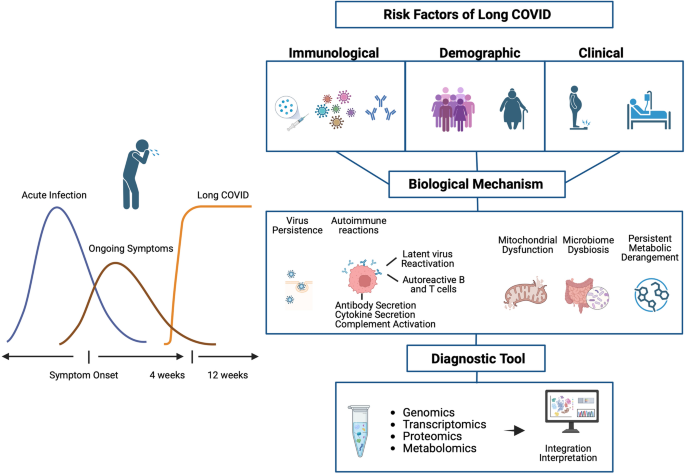
米国では、毎年最大4800万人がロングコロナに苦しむ可能性があると報告。感染者の3〜6割が12週以上続く症状に移行し、原因はウイルス残存・免疫異常・代謝破綻。個人だけでなく社会・経済全体に大打撃。迅速な診断体制と支援が急務と研究者ら。https://t.co/xu3XjUvSbz
— Angama (@Angama_Market) June 20, 2025
◆Advances in Understanding Long COVID: Pathophysiological Mechanisms and the Role of Omics Technologies in Biomarker Identification【SPRINGER NATURE 2025年6月18日】
Abstract
Long coronavirus disease (COVID) is a multisystem condition that affects a significant proportion of individuals following severe acute respiratory syndrome coronavirus 2 (SARS-CoV-2) infection, with persistent symptoms ranging from fatigue and cognitive dysfunction to cardiovascular disorders. It is estimated that 30–60% of infected individuals experience symptoms lasting more than 12 weeks. Despite advances in understanding acute infection, the pathophysiological mechanisms underlying long COVID remain unclear. Current hypotheses suggest that viral persistence, immune dysfunction, and metabolic alterations play central roles. Omics approaches, including metabolomics, proteomics, and lipidomics, have played a crucial role in investigating molecular changes, identifying biomarkers, and refining therapeutic strategies. This review discusses recent advances in understanding long COVID, addressing its mechanisms, risk factors, the impact of viral variants, and the role of vaccination, with an emphasis on the importance of omics technologies in elucidating this condition.
妊娠中にCOVIDに感染した母親から生まれた子どもたち、24ヶ月時点で約6割に言語遅延、5割以上に運動発達遅延が判明。臍帯血中の炎症性サイトカイン(IFN-γ、IL-6など)と明確な相関。早期の発見と介入が鍵に。https://t.co/g9L81jXVlw
— Angama (@Angama_Market) June 20, 2025
◆Cord blood cytokines/chemokines linked to delays in toddlers exposed to SARS-CoV-2 prenatally【nature : pediatric research 2025年6月11日】
Abstract
Background
Maternal infections are linked to neurodevelopmental impairments, highlighting the need to investigate SARS-CoV-2-induced immune activation.
Objective
This study aimed to evaluate the impact of maternal infection on neurodevelopment and investigate whether cytokine and chemokine profiles predict delays at 24 months.
Methods
Conducted in Brazil (January 2021–March 2022), this follow-up study included 18 SARS-CoV-2 positive pregnant women at 35–37 weeks’ gestation, 15 umbilical cord blood samples, and blood samples from 15 children at 6 months and 14 at 24 months. Developmental delay was defined using the Bayley Scales of Infant and Toddler Development, Third Edition, with scores below 90 in cognitive, communication, or motor domains.
Results
At 6 months, 33.3% of infants exhibited cognitive delays, 20% communication delays, and 40% motor delays, increasing to 35.71%, 64.29%, and 57.14% at 24 months, respectively. Elevated interferon-gamma and tumor necrosis factor-alpha in cord blood correlated with cognitive delays, while interleukin (IL)-6, IL-8, IL-17, and IL-1β were associated with motor delays. Increased C-X-C motif chemokine ligand 10 and other cytokines were associated with communication delays.
Conclusion
Maternal SARS-CoV-2 may impact infant neurodevelopment, as early cytokine elevations correlate with delays, highlighting the importance of early monitoring and interventions to reduce long-term effects.
COVID-19回復後も肺の不調が続く一部の人から、ACE2酵素を模倣する自己抗体が検出。この抗体はACE2の正常な働きを妨げ、後遺症の持続に関与している可能性。肺や血管の調整機能を狂わせる“偽ACE2”の存在は注視https://t.co/1XvmijXp4X
— Angama (@Angama_Market) June 20, 2025
◆ACE-2-like Enzymatic Activity in COVID-19 Convalescents with Persistent Pulmonary Symptoms Associated with Immunoglobulin【medRxiv 2025年6月4日】
Abstract
Many difficult to understand clinical features characterize COVID-19 and Post-Acute Sequelae of COVID-19 (PASC or Long COVID, LC). These can include blood pressure instability, hyperinflammation, coagulopathies, and neuropsychiatric complaints. The pathogenesis of these features remains unclear. The SARS-CoV-2 Spike protein Receptor Binding Domain (RBD) binds Angiotensin Converting Enzyme 2 (ACE2) on the surface of host cells to initiate infection. We hypothesized that some people convalescing from COVID-19 may produce anti-RBD antibodies that resemble ACE2 sufficiently to have ACE2-like catalytic activity, that is they are ACE2-like proteolytic abzymes that may help mediate the pathogenesis of COVID-19 and LC. In previous work, we showed that some people with acute COVID-19 had immunoglobulin-associated ACE2-like proteolytic activity, suggesting that some people with COVID-19 indeed produced ACE2-like abzymes. However, it remained unknown whether ACE2-like abzymes were seen only in acute COVID-19 or whether ACE2-like abzymes could also be identified in people convalescing from COVID-19. Here we show that some people convalescing from COVID-19 attending a clinic for people with persistent pulmonary symptoms also have ACE2-like abzymes and that the presence of ACE2-like catalytic activity correlates with alterations in blood pressure in an exercise test.