SARS-CoV-2 と COVID-19 に関するメモ・備忘録
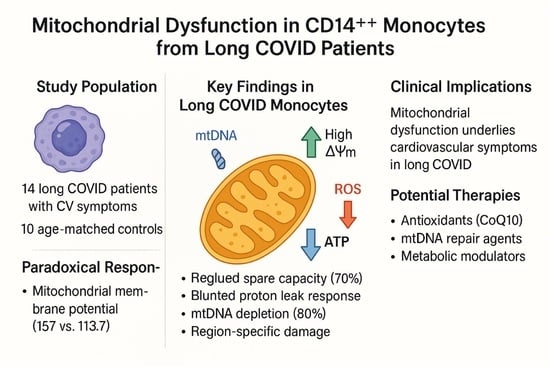
ドイツ研究:心血管症状を持つロングコロナ患者では、単球のミトコンドリア機能が著しく損なわれ、酸化ストレスへの適応不全、膜電位の過剰、mtDNA損傷(−80%)が観察された。スパイク蛋白では再現されず、宿主応答の破綻が原因。治療標的としてミトコンドリアの再生が急務。https://t.co/WCb4al2ilM
— Angama (@Angama_Market) May 13, 2025
特に妊娠中の感染がmtDNA損傷や酸化ストレスの蓄積と関係する場合、長期的な影響(出生後の疾患リスクなど)に繋がる可能性があるため、今後の研究が注目されています。
— Angama (@Angama_Market) May 14, 2025
◆Persistent Monocytic Bioenergetic Impairment and Mitochondrial DNA Damage in PASC Patients with Cardiovascular Complications【MDPI 2025年5月9日】
Abstract
Cardiovascular complications are a hallmark of Post-Acute Sequelae of Severe Acute Respiratory Syndrome Coronavirus 2 (SARS-CoV-2) infection (PASC), yet the mechanisms driving persistent cardiac dysfunction remain poorly understood. Emerging evidence implicates mitochondrial dysfunction in immune cells as a key contributor. This study investigated whether CD14++ monocytes from long COVID patients exhibit bioenergetic impairment, mitochondrial DNA (mtDNA) damage, and defective oxidative stress adaptation, which may underlie cardiovascular symptoms in PASC. CD14++ monocytes were isolated from 14 long COVID patients with cardiovascular symptoms (e.g., dyspnea, angina) and 10 age-matched controls with similar cardiovascular risk profiles. Mitochondrial function was assessed using a Seahorse Agilent Analyzer under basal conditions and after oxidative stress induction with buthionine sulfoximine (BSO). Mitochondrial membrane potential was measured via Tetramethylrhodamine Ethyl Ester (TMRE) assay, mtDNA integrity via qPCR, and reactive oxygen species (ROS) dynamics via Fluorescence-Activated Cell Sorting (FACS). Parallel experiments exposed healthy monocytes to SARS-CoV-2 spike protein to evaluate direct viral effects. CD14++ monocytes from long COVID patients with cardiovascular symptoms (n = 14) exhibited profound mitochondrial dysfunction compared to age-matched controls (n = 10). Under oxidative stress induced by buthionine sulfoximine (BSO), long COVID monocytes failed to upregulate basal respiration (9.5 vs. 30.4 pmol/min in controls, p = 0.0043), showed a 65% reduction in maximal respiration (p = 0.4035, ns) and demonstrated a 70% loss of spare respiratory capacity (p = 0.4143, ns) with significantly impaired adaptation to BSO challenge (long COVID + BSO: 9.9 vs. control + BSO: 54 pmol/min, p = 0.0091). Proton leak, a protective mechanism against ROS overproduction, was blunted in long COVID monocytes (3-fold vs. 13-fold elevation in controls, p = 0.0294). Paradoxically, long COVID monocytes showed reduced ROS accumulation after BSO treatment (6% decrease vs. 1.2-fold increase in controls, p = 0.0015) and elevated mitochondrial membrane potential (157 vs. 113.7 TMRE fluorescence, p = 0.0179), which remained stable under oxidative stress. mtDNA analysis revealed severe depletion (80% reduction, p < 0.001) and region-specific damage, with 75% and 70% reductions in amplification efficiency for regions C and D (p < 0.05), respectively. In contrast, exposure of healthy monocytes to SARS-CoV-2 spike protein did not recapitulate these defects, with preserved basal respiration, ATP production, and spare respiratory capacity, though coupling efficiency under oxidative stress was reduced (p < 0.05). These findings suggest that mitochondrial dysfunction in long COVID syndrome arises from maladaptive host responses rather than direct viral toxicity, characterized by bioenergetic failure, impaired stress adaptation, and mitochondrial genomic instability. This study identifies persistent mitochondrial dysfunction in long COVID monocytes as a critical driver of cardiovascular complications in PASC. Key defects—bioenergetic failure, impaired stress adaptation and mtDNA damage—correlate with clinical symptoms like heart failure and exercise intolerance. The stable elevation of mitochondrial membrane potential and resistance to ROS induction suggest maladaptive remodeling of mitochondrial physiology. These findings position mitochondrial resilience as a therapeutic target, with potential strategies including antioxidants, mtDNA repair agents or metabolic modulators. The dissociation between spike protein exposure and mitochondrial dysfunction highlights the need to explore host-directed mechanisms in PASC pathophysiology. This work advances our understanding of long COVID cardiovascular sequelae and provides a foundation for biomarker development and targeted interventions to mitigate long-term morbidity.
UNC主導の研究で、SARS-CoV-2がm6Aメチル化システムをG9a経由で乗っ取り、免疫抑制と自己複製に必要な翻訳を促進することが判明。G9a阻害薬は感染細胞と患者PBMCで多層的異常を逆転し、ロングコロナ治療の鍵になる可能性。https://t.co/xeLDnpEWyw
— Angama (@Angama_Market) May 13, 2025
◆Targeting G9a-m6A translational mechanism of SARS-CoV-2 pathogenesis for multifaceted therapeutics of COVID-19 and its sequalae【iScience 2025年5月11日】
Summary
N6-methyladenosine (m6A) modification pathway is hijacked by several RNA viruses, including SARS-CoV-2, making it an attractive host-directed target for development of broad-spectrum antivirals. Here, we show that histone methyltransferase G9a, through its interaction with METTL3, regulates SARS-CoV-2-mediated rewiring of host m6A methylome to ultimately promote turnover, abundance, secretion and/or phosphorylation of various viral receptors and proteases, transcription factors, cytokines/chemokines, coagulation and angiogenesis associated proteins, and fibrosis markers. More importantly, drugs targeting G9a and its associated protein EZH2 are potent inhibitors of SARS-CoV-2 replication and reverse multi-omic effects of coronavirus infection in human alveolar epithelial cells (A549-hACE2) and COVID-19 patient peripheral blood mononuclear cells (PBMCs)—with similar changes seen in multiorgan autopsy samples from COVID-19 patients. Altogether, we extend G9a function(s) beyond transcription to translational regulation during COVID-19 pathogenesis and show that targeting this master regulatory complex represents a new strategy (drug-class) that can be leveraged to combat emerging anti-viral resistance and infections.

ロングコロナ患者86名を対象に毛細血管のNVC検査を実施した結果、18ヶ月経っても毛細血管の拡張、微小出血、密度低下が顕著に残存。回復者では正常化。毛細血管の変化は呼吸・心血管症状と相関し、長期の血管障害が関与している可能性が示唆された。https://t.co/suI1A77NdF
— Angama (@Angama_Market) May 13, 2025
◆Multicentre retrospective detection of nailfold videocapillaroscopy abnormalities in long covid patients【BMJ Journals : RMD Open 2025年4月28日】
Abstract
Background SARS-CoV-2 induces acute non-specific endothelial/microvascular alterations that have been identified by nailfold videocapillaroscopy (NVC). Details on NVC abnormalities in long covid (LC) patients (pts) are unknown.
Methods LC pts without and with systemic sclerosis (non-SSc-LC and SSc-LC), recovered COVID-19 (RC) pts that did not develop LC and healthy matched control subjects (CNT) that underwent NVC examinations were evaluated in a multicentre national study from the Capillaroscopy and Microcirculation in Rheumatic Diseases Study Group of the Italian Society of Rheumatology. Retrospective collection was performed for demographic data, course of SARS-CoV-2 infection, comorbidities, concomitant drugs. NVC alterations were quantified by validated scores. Pre-COVID-19 and post-COVID-19 microvascular status was analysed by NVC.
Results 62 non-SSc-LC pts (49 female/13 male, 51±16 years old), 24 SSc-LC pts (21 female/3 male, 59±17 years old), 23 RC pts (18 female/5 male, 51±18 years old) and 84 CNT (68 female/16 male, 52±12 years old) were analysed. Non-SSc-LC pts showed significantly more dilated capillaries (p<0.01, p multivariate<0.01), microhaemorrhages (p=0.01, p multivariate<0.05), abnormal shapes (p<0.05, p multivariate<0.05) than CNT and of note, lower mean capillary number per linear millimetre (p<0.01, p multivariate<0.01) than both RC pts and CTN (p<0.01, p multivariate<0.05). Of highest interest, 16 non-SSc-LC pts showed statistically significantly more dilated capillaries (p<0.05) and microhaemorrhages (p<0.05) in NVC examinations after COVID-19, compared with pre-COVID-19 status. Similarly, SSc-LC pts (24) showed significantly lower capillary density (p=0.01) and more dilated capillaries (p<0.01) in NVC examinations after COVID-19, compared with pre-COVID-19 status. Conclusions LC pts show more microvascular alterations at NVC as compared with RC patients and CNT, which may contribute to the pathogenesis of persistent organ/systems dysfunction.
ロングコロナ2年後の心血管研究
・交感神経活動+77%
・大動脈の硬化+心機能の低下
・抗酸化力↓/酸化ストレス↑
・血管損傷マーカー(EVs)↑
・運動耐性VO2maxが-21%低下
感染2年後も交感神経優位と血管障害が続き、症状の背後に“慢性の神経血管異常”が関与している可能性。https://t.co/fiyhwwcq1Z— Angama (@Angama_Market) May 14, 2025
◆Sympathetic neural overdrive, vascular dysfunction, and diminished exercise capacity in patients with long COVID-19: a long-term study of cardiovascular sequelae【American Journal of Physioligy 2025年5月1日】
Abstract
We have recently showed that patients with severe coronavirus disease (COVID) have neurovascular dysfunction, cardiac morphofunctional alterations, and attenuated exercise capacity. However, whether these alterations persist over time is unknown. Here, we tested the hypothesis that patients with long COVID, even 2 yr after severe acute respiratory syndrome coronavirus 2 (SARS-COV-2) infection, exhibit sympathetic overdrive, aortic stiffening, endothelium-dependent dysfunction, cardiac morphofunctional changes, and diminished exercise capacity. Eighteen patients with long COVID and 19 well-matched controls were studied. Muscle sympathetic nerve activity (MSNA; microneurography), brachial artery flow-mediated dilation (BAFMD; ultrasound-Doppler), carotid-femoral pulse wave velocity (CFPWV; tonometry), heart rate (HR; electrocardiogram), E-wave/A-wave ratio (E/A ratio), left ventricular ejection fraction and global longitudinal strain (LVEF and LVGLS, respectively; echocardiography), and peak oxygen uptake (peak V̇o2, cardiopulmonary exercise testing) were assessed ∼2 yr after hospital discharge. Circulating angiotensin II (Ang II, mass spectrometry), endothelial cell-derived extracellular vesicles (endothelial cell-derived EVs, flow cytometry), and oxidative stress were also evaluated. Patients with long COVID had higher MSNA, CFPWV, and HR and lower E/A ratio, LVEF, LVGLS, and peak V̇o2 than controls. Endothelial cell-derived EVs and carbonyls were higher in patients with long COVID than controls, whereas superoxide dismutase (SOD) was lower. No difference was observed in Ang II. Peak V̇o2 was inversely associated with MSNA, LVGLS, and carbonyls and directly associated with BAFMD and SOD. Our findings reveal that patients with long COVID, 2 yr after acute illness, exhibit persistent sympathetic overactivation, vascular and cardiac impairments, reduced exercise capacity, and increased endothelial cell-derived EVs and oxidative stress. As such, strategies that can resolve these persistent cardiovascular sequelae are urgently needed.

アメリカの大規模研究(約2.7万人)で、妊娠前や初期のCOVID-19感染が流産リスクを2〜3倍に高めると判明。軽症でも有意な影響あり。感染から1年以上経過していてもリスクは持続。妊活中の感染歴にも注意が必要。https://t.co/sWVoqckGBL
— Angama (@Angama_Market) May 14, 2025
◆COVID-19 infection history as a risk factor for early pregnancy loss: results from the electronic health record-based Southeast Texas COVID and Pregnancy Cohort Study【BMC Medicine 2025年5月9日】
Abstract
Background
The effects of SARS-CoV-2 infection before or during pregnancy on pregnancy outcomes are still largely unknown. We hypothesized that COVID-19 in early pregnancy is a risk factor for adverse pregnancy outcomes, particularly miscarriage.
Methods
We examined the relationship between COVID-19 and adverse pregnancy outcomes, including spontaneous abortion, ectopic pregnancy, and preterm delivery in a large, retrospective, electronic health record (EHR)-based cohort, from 2019 to 2023. Generalized estimating equation modeling was performed to identify risk factors for adverse pregnancy outcomes. Study exposures included COVID-19 before pregnancy, COVID-19 during pregnancy, age, race/ethnicity, comorbidity burden, and neighborhood-level social vulnerability.
Results
In the Southeast Texas Pregnancy and COVID Cohort (26,783 pregnancy episodes), the risk of miscarriage among pregnancy episodes with a miscarriage, livebirth, or delivery outcome was 6.3% (1514/ 24,119). In multivariable modeling, history of both mild and moderate to severe COVID-19 before pregnancy were associated with miscarriage (adjusted odds ratio (aOR) 2.48, confidence interval (CI) 2.21–2.78 and aOR 2.81, CI 1.8–4.38, respectively). Additionally, in the same model, both mild and moderate to severe COVID-19 in the first trimester were associated with miscarriage (aOR 2.31, CI 1.96–2.72 and aOR 2.45, CI 1.12–5.35, respectively).
Conclusions
COVID-19 both prior to and during pregnancy was identified as a risk factor for spontaneous abortion in this study sample. These findings highlight the importance of COVID-19 vaccination and post-COVID management for pregnant people and those planning a pregnancy.
ケベック州の医療従事者2.2万人調査で、COVID初感染後のロングCOVID発症率は約15〜17%。再感染では約5%と3分の1に低下。ただし回数が増えるほどリスクは累積。症状は呼吸困難・脳の霧・疲労・PEMが中心で、重症例は日常生活にも重大な影響を与えていた。https://t.co/7Q292xdfOY
— Angama (@Angama_Market) May 14, 2025
◆Long COVID risk and severity after COVID-19 infections and reinfections in Quebec healthcare workers【medRxiv 2025年5月9日】
Abstract
Importance Long COVID, a chronic condition following SARS-CoV-2 infection, affects millions of people worldwide and can lead to significant functional impairment. Estimates of long COVID risk after a first COVID-19 infection vary, and data on risk following reinfections remain lacking.
Objective To estimate and compare long COVID risk and severity with first COVID-19 infection versus reinfections among healthcare workers (HCWs).
Design Retrospective cohort study based on an electronic survey among Quebec HCWs conducted between May 16 and June 15, 2023. A short telephone survey among randomly selected non-respondents further assessed potential response bias.
Setting Population-based study in Quebec, Canada.
Participants 397 222 HCWs were invited to participate in the electronic survey and 10 500 in the telephone survey.
Main outcomes and measures We defined long COVID cases as HCWs self-reporting COVID-19-attributed symptoms lasting ≥12 weeks, classified as mild, moderate, or severe based on perceived symptom intensity. We compared self-reported symptoms and functional limitations of cases to COVID controls (infected participants without long COVID) and non-COVID controls (uninfected participants). Risk and prevalence were estimated by number of infections, likely infecting variant and perceived acute COVID-19 severity. We conducted symptom clustering analyses using unsupervised learning techniques.
Results Estimated long COVID risk following any COVID-19 infection was similar among 22 496 online survey participants (17.0% [95%CI, 16.3%–17.6%] and 3 978 telephone survey participants (15.9% [14.6%–17.2%]. The cumulative risk increased with the number of infections, but reinfections were associated with three times lower risk of long COVID than first infections.
Pre-Omicron infections and severe acute COVID-19 episodes correlated with higher long COVID risk and severity. Among prevalent long COVID cases, 43% were moderate and 33% severe. Compared to controls, dyspnea, neurocognitive symptoms, post-exertional malaise and smell/taste disturbances were most strongly associated with long COVID. Cluster analysis identified seven symptom groups with systemic, neurocognitive, pulmonary, and mood-related clusters being the most prevalent. Severe long COVID cases exhibited multiple symptom clusters and greater functional limitations.
Conclusions Long COVID is a common and disabling condition among HCWs. Societal and healthcare burden remains important and will continue to accrue given ongoing SARS-CoV-2 transmission and long COVID risk with reinfections.
Question Does the risk and severity of long COVID differ for first COVID-19 infections versus reinfections among healthcare workers in Quebec, Canada?
Findings The risk of long COVID was ∼15% with first COVID-19 infection, but three-fold lower with reinfections. Risk was higher with COVID-19 infections due to ancestral strains and with more severe acute episodes. Long COVID risk and severity compromised self-rated health, physical capacity and cognitive function.
Meaning Long COVID is a common and disabling condition among workers. Societal and healthcare burden remains important and will continue to accrue given ongoing SARS-CoV-2 transmission and long COVID risk with reinfections.
13.9万人を対象としたメタ解析で、BMI高値がロングコロナの神経・精神症状リスクを有意に増加させると判明。肥満で記憶障害1.4倍、頭痛1.45倍、めまい1.44倍。味覚・嗅覚障害も含まれ、神経系への慢性炎症やウイルス残存との相互作用が示唆される。https://t.co/P7e027GBPr
— Angama (@Angama_Market) May 15, 2025
◆Excess weight is associated with neurological and neuropsychiatric symptoms in post-COVID-19 condition: A systematic review and meta-analysis【PLOS One 2025年5月7日】
Abstract
Background/purpose
Excess weight has been identified as a potential risk factor for post-COVID-19 condition (PCC). This systematic review and meta-analysis aimed to investigate whether excess weight is associated with the development or experience of neurological and neuropsychiatric symptoms in PCC.
Methods
We conducted a comprehensive search of eight databases (PubMed, Embase, Scopus, Web of Science, VHL, Google Scholar, ProQuest, and medRxiv) for studies published up to July 2023. Studies were included if they assessed PCC symptoms in relation to nutritional status, specifically the development of neurological and neuropsychiatric symptoms more than 12 weeks post-infection. The analysis compared exposure and controls groups (excess weight vs. normal weight; obesity vs. non-obesity). Data were synthesized using a random-effects model.
Results
Of the 10,122 abstracts screened, 18 studies (n = 139,091 adults) were included. These studies included 79,050 individuals with excess weight vs 57,926 normal-weight individuals and 30,694 individuals with obesity vs 107,612 non-obese individuals. The presence of excess weight in PCC was significantly associated with persistent depression (RR = 1.21; 95% CI: 1.03–1.42), headache (OR = 1.23; 95% CI: 1.10–1.37), memory issues (RR = 1.43; 95% CI: 1.24–1.65), sleep disturbance (RR = 1.31; 95% CI: 1.16–1.48), and vertigo (RR = 1.21; 95% CI: 1.04–1.41). Obesity was significantly associated with persistent headache (OR = 1.45; 95% CI: 1.37–1.53), numbness (RR = 1.61; 95% CI: 1.46–1.78), smell disorder (OR = 1.16; 95% CI: 1.11–1.22), taste disorder (OR = 1.22; 95% CI: 1.08–1.38), and vertigo (RR = 1.44; 95% CI: 1.35–1.53).
Conclusions
Excess weight, including overweight and obesity, is associated with experiencing neuro-symptoms related to PCC. Individuals with these conditions urgently need enhanced personalized care management in current post-pandemic context.
英教員の77%が「子どもの微細運動能力が過去5年で低下」と回答。鉛筆を持つ、ハサミを使う、描くといった基本的動作に課題が。背景にはアート教育の軽視や遊びの変化か。手先の器用さは認知発達やウェルビーイングにも密接に関連。https://t.co/URN9xkm2k5
— Angama (@Angama_Market) May 15, 2025
◆Three-quarters of primary teachers report declining fine motor skills【tes magazine : Cerys Turner 2025年5月13日】
Three-quarters of primary school teachers are concerned that children’s ability to hold a pencil, draw or use scissors has worsened over the past five years.
Some 77 per cent of primary teachers have noticed a deterioration in pupils’ ability to perform precise movements since 2020, YouGov polling has revealed.
The findings on fine motor skills come as new data obtained by Tes has revealed major increases in the use of transcribers and scribes for key stage 2 Sats, prompting concerns that primary school pupils’ handwriting standards are deteriorating.
Struggle to cover art in primary curriculum
The survey of 569 primary school teachers also found that respondents are struggling to teach art within the current curriculum.
And just 26 per cent of primary teachers believe pupils are reaching their artistic potential.
It comes after the government pledged to build a National Centre for Arts and Music Education to promote opportunities for pupils to pursue the arts. It is due to be finished in September 2026.
Survey findings show that 76 per cent of teachers agreed that art education is not prioritised in schools, with 18 per cent reporting that they spend no time at all teaching art in an average week.
Just 12 per cent of teachers manage to provide more than 60 minutes of art education weekly.
The concerns come after a coalition of arts and education organisations warned last year that the schools sector is facing an “arts apocalypse”.
Lack of training to teach art
A previous survey showed that the vast majority of primary school teachers (92 per cent) said that a lack of funding had negatively affected creative subjects.
Some 44 per cent of teachers polled by YouGov said that they have access to the right resources and training levels to successfully teach art.
A similar proportion (43 per cent) reported that their teacher training did not give them sufficient confidence to deliver art and design lessons.
Just 20 per cent of primary teachers believe they have adequate opportunities for professional development in art education.
The survey, commissioned by arts provider art-K, also asked primary teachers about how art education can benefit pupils.
Some 71 per cent of teachers said that there is a direct relationship between art activities, handwriting development and mathematical problem solving abilities.
A further 81 per cent of respondents agreed that improving art education would also enhance pupils’ wellbeing.
A Department for Education spokesperson said that the government is “committed to ensuring art, music and drama are no longer the preserve of a privileged few”.
They added: “Our Curriculum and Assessment Review seeks to deliver a rich and broad, inclusive and innovative curriculum, and our new National Centre for Music and Arts Education will promote opportunities for children and young people to pursue their artistic and creative interests in school.”
NZの大学生を対象にした研究で、COVID感染歴のある学生の37%が実際に認知機能障害を示し、40%がブレインフォグを訴えた。脳の前頭前野の活動パターンは40歳以上年上の高齢者に類似。若年層にも“加速した脳老化”の兆候が見られたのは今回が初の証拠。https://t.co/oQPyt3oxRJ
— Angama (@Angama_Market) May 16, 2025
◆COVID-19 may Enduringly Impact Cognitive Performance and Brain Haemodynamics in Undergraduate Students【ScienceDirect 2024年12月19日】
Abstract
To date, 770 million people worldwide have contracted COVID-19, with many reporting long-term “brain fog”. Concerningly, young adults are both overrepresented in COVID-19 infection rates and may be especially vulnerable to prolonged cognitive impairments following infection. This calls for focused research on this population to better understand the mechanisms underlying cognitive impairment post-COVID-19. Addressing gaps in the literature, the current study investigated differences in neuropsychological performance and cerebral haemodynamic activity following COVID-19 infection in undergraduate students. 94 undergraduates (age in years: M = 20.58, SD = 3.33, range = 18 to 46; 89 % female) at the University of Otago reported their COVID-19 infection history before completing a neuropsychological battery while wearing a multichannel near-infrared spectroscopy (NIRS) device to record prefrontal haemodynamics. We observed that 40 % retrospectively self-reported cognitive impairment (brain fog) due to COVID-19 and 37 % exhibited objective evidence of cognitive impairment (assessed via computerised testing), with some suggestion that executive functioning may have been particularly affected; however, group-level analyses indicated preserved cognitive performance post COVID-19, which may in part reflect varying compensatory abilities. The NIRS data revealed novel evidence that previously infected students exhibited distinct prefrontal haemodynamic patterns during cognitive engagement, reminiscent of those observed in adults four decades older, and this appeared to be especially true if they reported experiencing brain fog due to COVID-19. These results provide new insights into the potential neuropathogenic mechanisms influencing cognitive impairment following COVID-19.
COVID-19後に胸焼けや逆流症状が続く人へ。入院歴のある患者の生検で、食道粘膜のバリア機能低下・酸透過性上昇・炎症性サイトカイン(IL-8)増加・Claudin-2過剰発現が確認。後遺症としての「食道障害」が科学的に裏付けられた初の研究の一つ。https://t.co/MltyHvCTgt
— Angama (@Angama_Market) May 16, 2025
◆Impairment of Esophageal Barrier Integrity: New Insights into Esophageal Symptoms in Post-COVID-19【SPRINGER NATURE 2025年5月2日】
Abstract
Background
The COVID-19 pandemic, caused by SARS-CoV-2, has unveiled a range of symptoms beyond the respiratory system, including significant gastrointestinal manifestations.
Aims
This study explores the prevalence and intensity of gastroesophageal symptoms in post-COVID-19 patients and the integrity of the esophageal epithelial barrier.
Methods
We conducted a prospective longitudinal cohort study with 55 patients hospitalized due to COVID-19 at a University Hospital. Patients were evaluated during hospitalization and between 3 and 6 months post-discharge, using validated questionnaires for gastrointestinal and gastroesophageal reflux symptoms. Additionally, 25 of these patients underwent upper digestive endoscopy, with esophageal mucosal biopsies analyzed for transepithelial electrical resistance (TER), permeability, and expression of inflammatory cytokines and cell junction proteins. Data expressed as mean EPM, inference by two-way ANOVA.
Results
Results were considered statistically significant at p < 0.05. There were significant increases in heartburn and acid reflux symptoms in post-COVID-19 patients, as measured by the GSRS questionnaire. Biopsies from post-COVID patients revealed increased esophageal permeability when compared to non-COVID patients in acidic media (pH 2: non-COVID-19: 717.8 ± 168.2 vs. post-COVID-19: 1377.6 ± 316.4), suggesting compromised mucosal barrier. Furthermore, IL-8 levels and expression of Claudin-2 were elevated in these patients. Conclusions
The data suggested that COVID-19 infection may cause lasting damage to the esophageal epithelial barrier, increasing its permeability and provoking an exacerbated inflammatory response. These changes may explain the prevalence of post-infection gastroesophageal symptoms. Our findings underscored the importance of continuous monitoring and the development of therapeutic strategies to mitigate gastroesophageal effects in patients recovering from COVID-19.

感染してない細胞にもSARS2-Nタンパクが表面に転移し、抗N抗体によって補体攻撃の標的となる仕組みが示されました。肺上皮モデルで確認済。重症例ほど抗N抗体が強く、肺異常とも相関。エノキサパリンがこの攻撃を阻止。抗ウイルス薬では防げない損傷の原因かhttps://t.co/GGKHFtjUWw
— Angama (@Angama_Market) May 17, 2025
◆Transfer of SARS-CoV-2 nucleocapsid protein to uninfected epithelial cells induces antibody-mediated complement deposition【Cell Reports 2025年5月8日】
Summary
SARS-CoV-2 infection triggers a strong antibody response toward nucleocapsid protein (NP), suggesting its extracellular presence beyond intravirion RNA binding. Our co-culture experiments show NP decorates infected and proximal uninfected cell surfaces. We propose a mechanism whereby extracellular NP on uninfected cells contributes to COVID-19 pathogenicity. We show that NP binds to cell-surface sulfated glycosaminoglycans using its RNA-binding sites, facilitated by the flexible, positively charged linker. Coating uninfected lung-derived cells with NP attracted anti-NP IgG from lung fluids and sera of COVID-19 patients. Immune recognition was significantly higher in moderate versus mild COVID-19. Binding of anti-NP IgG in sera generated clusters, triggering C3b deposition via the classical complement pathway on SARS-CoV-2 non-susceptible cells co-cultured with infected cells. The heparin analog enoxaparin outcompeted NP binding, rescuing cells from anti-NP IgG-mediated complement deposition. Our findings reveal how extracellular NP may exacerbate COVID-19 damage and suggest preventative therapy avenues.
